You are currently browsing the yearly archive for 2015.
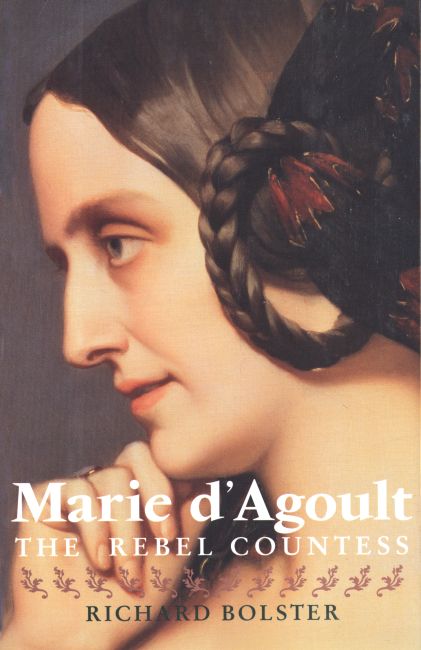 In June of 1834, Marie Catherine Sophie, Comtesse d’Agoult (later known as the writer Daniel Stern), at the urging of her friend, novelist Eugène Sue, sought a reading with Mlle. Lenormand that promised great things. Four days later a hopeful Eugène Sue obtained a reading. Both Marie d’Agoult’s reading and that of M. Sue are recounted in her memoirs.
Thus we learn of Eugène’s unrequited love for Marie and a prediction of her future that was soon to take an astonishing turn. The following year Marie divorced her husband and met the pianist and composer Franz Liszt, with whom she had three illegitimate children (one of whom became the celebrated and influential wife of Richard Wagner).
Here is Marie d’Agoult’s own account.
I went to Mlle. Lenormand on 23 June of the year 1834, at the suggestion of the famous novelist, Eugene Sue, who spoke to me of her as a prodigious person through her power of penetration and intuition. Mlle. Lenormand then lived in the rue de Tournon and gave her consultations from a very dark, dirty, and strongly musty room, to which, using some pretty childish tricks, she had given an air of necromancy.
It was no longer the period of her brilliant fame, when, by virtue of her prediction to Madame de Beauharnais, she had achieved credit with the greatest rulers of Europe – it will be recalled that, at the Congress of Aachen, Alexandre visited her frequently and seriously; Lord Wellington also consulted her to learn the name of the man who had attempted to assassinate him in 1818; she was now almost forgotten. Few people knew the way to her home.
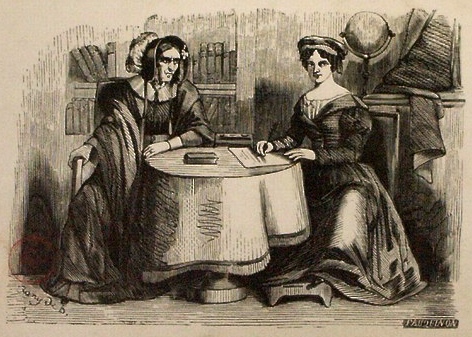
Old, thick, sordid in her attire, wearing a square cap, how medieval she appeared, backlit in a large greasy leather armchair at her table covered with cabalistic cards; a large black cat meowed at her feet with a witch’s air. The prompt and piercing glance of the diviner, thrown on the sly, as she shuffled her cards—for a few francs in addition to the common price for what she called the big game (grand jeu)—she revealed to one, without doubt, the kind of concern and mood of the character of the one who consulted her and helped to predict a future that, after all, for each of us, and except for the very limited intervention of chance, is the result of our temperament and character.
What she said amazed me because I did not know myself then, otherwise I could have, to some extent, been my own oracle, and predicted, without consulting anyone [else], what my destiny would be. On my way home, I noted down what Mlle. Lenormand had said to me. I’ve copied it here for those curious about these kinds of meetings.
“There will be a total change in your destiny in the next two or three years. What would appear to you at this time, to be absolutely impossible will come true. You will entirely change your way of living. You will change your name thereafter, and your new name will become famous not only in France but in Europe. You will leave your country for a long time. Italy will be your adopted country; you will be loved and honored.
“You’ll love a man who will make an impression in the world and whose name will make a great clamour. You inspire strong feelings of enmity in two women who will seek to harm you by all means possible. But have faith; you will triumph through everything. You will live to be old, surrounded by true friends, and you will have a beneficial influence on a lot of people.
“Pay attention to your dreams that warn you of danger. Distrust your imagination that enthuses easily and will throw you in the path of danger, which you will escape through great courage. Moderate your benevolence which is blind. Expect that your mind, which is independent and sincere, will make you a lot of enemies and your kindness will be ignored.”
I also found, among my correspondence with Eugene Sue, a letter which refers to Mlle. Lenormand, and I have joined it here to supplement what I have told of this incident.
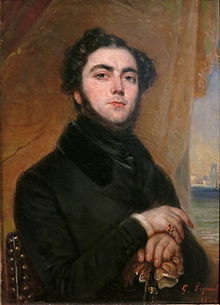 Letter of Eugène Sue,
Paris, June 27, 1834.
I have taken leave of our diviner, Madam, and I cannot but express my disappointment. You asked me to tell you the predictions she made me, as unpleasant as they are: so here they are:
You see, Madam, that the damned Sibyl varied at least in her prophecies, and your brilliant and European destiny contrasts badly with mine. After I was recognized as one of her assiduous believers, the accursed witch made me a few insignificant predictions, reminded me of others, and then suddenly, stopping to mix the diabolical cards, she fixed me with her penetrating and mocking eyes:
“Ho Ho!” said she, “here is something new and fatal. You are feeling a sentiment that she will not respond to.”
I wanted to deny it; she insisted. She spoke to me of a rare spirit of infinite charm; she painted for me a portrait that I would not dare recount here, but which was not unrecognizable. Then, seeing I was so completely divined, I was silent. I limited myself to asking her if there was, therefore, no hope, if some card had not been forgotten, if the combination was without error. The old woman began to re-calculate with an infernal complacency.
Alas! Madame, the result was absolutely the same: a deeply passionate feeling, without any hope, disturbed my present and destroyed my future. You see, Madame, in comparing this prediction to that which was made to you, I am doubly subject to accuse the fates; because it is said that the man whose destiny you will share will be famous, from which I conclude that the lover you push away will remain obscure. Oh well, Ma’am, I dare confess it to you, this glory announced to the man whom you will deign to love, I dreamed about it, I aspired to it, I felt strong enough to win it; but now that it is foretold that I will not be loved, I’ve dropped from the height of my dreams and ambitions to sadness and discouragement, empty of heart and spirit.
Regards, etc.
I wish to thank “Terry” who, in a comment on my detailed post on Mlle. Lenormand, introduced me to this material in Mes Souvenirs by Marie d’Agoult, Vol. 1, 1880, pp. 277-279. I cobbled the above account together from internet translators. Please feel free to share any corrections in the comments. The incident is only mentioned briefly in the biography by Richard Bolster (see cover photo above). See also my post: Madame Le Normand: The Most Famous Card Reader of All Time.
How many of us go to a movie or a play—even a really good one—and a couple of days or weeks later don’t remember a thing about it? Yes, movies have a role in relaxation and just plain momentary enjoyment, but there can be something said for the longer term pleasure of ruminating over the themes, questions and ideas presented in good art.
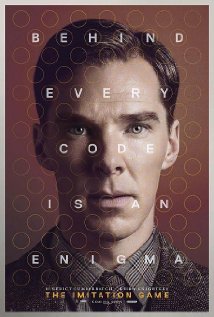 I have found Tarot and, more recently the 36 Lenormand cards, a great aid in meditating on ideas and art. This came into focus when I went to see the outstanding film The Imitation Game, about Alan Turing cracking the Enigma Code that helped end WWII. Themes also include the unconscionable way homosexuals have been treated and, ultimately, what is fair and just? I’ve put aside, for this discussion, the question of how accurate the film is—after all it is art, which serves to entertain and make us think and feel. [Trailer here.]
Note: if you know even the basics of Turing’s story, there is only one real spoiler below (so marked).
Before seeing The Imitation Game, I drew three cards each from the Petit Lenormand and a Tarot deck as separate readings. I wished to compare, in part, how the messages I received would differ in terms of plot versus philosophical themes, character dilemmas or spiritual content. I knew only the broadest outline of Turing’s achievement: the facts mentioned above.
I asked: “What should I focus on in this movie to gain the greatest insights?”
From the Malpertuis Lenormand deck I received:
Fox – Clover – Bear

Before the movie, I summed up my page of notes: “Risky strategy pays off by protecting Britain.”
Fox is cunning, trickery, strategy; and in modern Lenormand can mean a job.
Clover is luck, chance, risk, fortuitous, brief.
Bear is strength, protection or envy; modern meanings include investment, gain and authority figures like CEOs or police and military.
In my method of doing line-readings the first card is the subject, so Clover modifies Fox: a risky strategy. Clover also serves as a verb, “pays off” leading to a future result: protection (Bear). I also considered that these cards could indicate a fortuitous relationship between an employer (Bear) and a worker (Fox), although with Fox and Bear looking in opposite directions, they might have different agendas. Furthermore, Bear could resent and be envious of the smartness of Fox. After the movie, I also considered Fox+Clover as “code-breaking” and Bear as the fearsome enemy (Bear is described as a “ferocious beast” in the oldest text). So we simply have: “breaking the Nazi code.”
Imagine my surprise when the movie opens with a film of a bear! It turned out to be the logo of the production company: Black Bear. Part way into the movie Turing makes an unsuccessful attempt to tell a joke about two people running into a bear:
“The first one says, ‘You can’t outrun a bear.’ And the second one responds, ‘I don’t have to. I only have to outrun you.'”
This is a cunning strategy that can pay off when Fox is confronted by Bear. (Later I learned that Turing’s childhood toy bear—I seem to remember it being shown late in the film (?)—was his constant companion and is now featured in a display at Bletchley Park where the code-breaking took place.)
At a more abstract level, Turing could be seen as the intelligent Fox, with Bear representing his monster of a machine that he named Christopher—after his only childhood friend who protected him at school. Additionally, Fox, which can also represent something false, a faked ploy, is key to how these cards can relate to the “Turing Test” of artificial intelligence and especially Turing’s example of it in his “Imitation Game.”
From the 78-card Rider-Waite-Smith Tarot deck I received:
Tower reversed – Justice – Devil
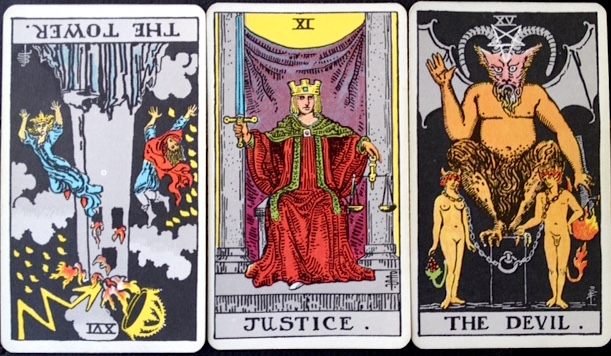
Having three Major Arcana cards indicates deeply “destined” circumstances. I tried two summing ups: “Justice (logic/right) ends the War with Evil (material dominion).” or “Choosing materialism/shame (Devil as outcome) versus (Justice) a cover-up of flaws and problems (Tower reversed).”
Tower reversed is averting disaster; bailing out; impotence; blocking or overturning destruction.
Justice is measured rationality, seeing the pros & cons; choice; balance; decision; and, of course, law and justice.
The Devil is utmost materiality; power structures; ego; shame; blame. (The parallel to Bear as envious, ferocious beast is notable.)
I considered that Justice in the center represented a balancing act between the Tower R and the Devil. Was shame (the Devil) somehow balancing an end to war (Tower)? Or was it more about needing to find a solution (Justice) that would keep the pressure-cooker from exploding (Tower reversed) that would let evil reign?
Mild Spoiler Alert:
Contemplating these cards since seeing the film, I see a much deeper issue hinted at by the movie—perverted justice done by a blind institution that causes great harm. I’ve learned from reading Lenormand that we have to see cards as being modified by what surrounds them. Justice doesn’t have to be reversed to indicate injustice—the Devil following Justice can show the great evil that justice itself can do. When a person is seen as “inverted” (“inversion” is an old classification for homosexual) then grave injustices are done. A point has been made that the royal “pardon” of Turing for his conviction as a homosexual is a travesty as he was guilty under the law and therefore “justly” convicted as were the 47,000 other men who were also convicted (and not pardoned). What we are shocked by is that a hero who saved millions of lives should have been treated so badly—but is that just to all the others? These cards indicate the reaction of today’s viewers that the “justice” against “inversion” was heart-breakingly “wrong,” while, according to the time, it was not, despite the fact that we now see the institution itself (the law) as as a great evil.
Major Spoiler Alert:
Upon breaking the Enigma Code, the team is faced with the realization that they cannot stop the Nazi attacks as that would reveal to the Nazis the breaking of the code and the immediate termination of its use. British intelligence would have to allow the killing and destruction to continue in order to know what the Germans were up to. I see this horrifying realization as the main climax of the film, perfectly depicted by the Tarot cards: the breakthrough that could end the war and the decision to allow great evil to continue as the only rational thing to do.
Added: A final summarizing of these Tarot cards in terms of the film:
To achieve true justice and the reversal of a destructive course there will be collateral damage (bad things happen).
I still find the Tarot to be the much deeper of the two decks, but the Lenormand cards astound me again and again with their uncanny precision and succinctness. As mentioned above, I’ll leave to you the implications of these cards to the Turing Test of artificial intelligence and his “Imitation Game.” Feel free to comment on these below.
Regarding the biographical accuracy of this piece of fiction: there are major problems. I can only hope that the film (enjoyable in its own right but only as fiction) will lead you to find out more about the real Alan Turing:
http://www.theguardian.com/film/2014/nov/20/the-imitation-game-invents-new-slander-to-insult-alan-turing-reel-history
Check out these other readings for films, plays and books:
https://marygreer.wordpress.com/2013/07/22/whos-afraid-of-virginia-woolf/
https://marygreer.wordpress.com/2012/10/09/reading-the-cards-for-movies-and-books/
 Mary K. Greer has made tarot her life work. Check here for reports of goings-on in the world of tarot and cartomancy, articles on the history and practice of tarot, and materials on other cartomancy decks. Sorry, I no longer write reviews. Contact me
 Mary K. Greer's Tarot Blog
Recent Comments