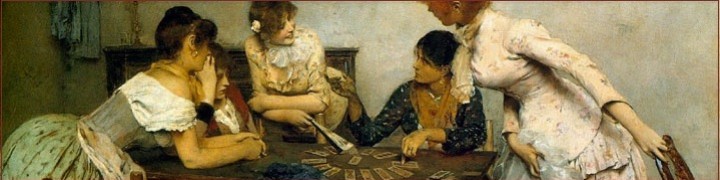
You are currently browsing the tag archive for the ‘tarot’ tag.
“I heard a distemperate dicer solemnly sweare that he faithfully beleeved, that dice were first made of the bones of a witch, and the cards of her skin, in which there hath ever sithence remained an enchantment that whosoever once taketh delight in either, he shall never have power utterly to leave them.”
—George Whetstone, The Enemie to Unthriftinesse, 1586.
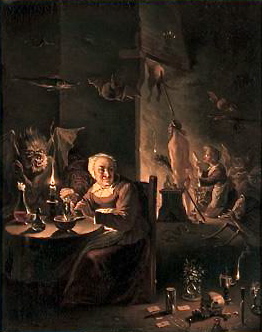
In a 1519 Milanese edition of a 14th century Spanish romance poem called La Spagna Istoriata, the hero Roland tries to discover the enemies of Charlemagne via magic by making a circle and casting or “throwing” the cards (fece un cerchio e poscia gittò le carte). Ross Caldwell tracked down the evidence and discovered that this phrase appears in only that one edition. All others say: fece un gran cerchio e poi gettava l’arte (“he made a big circle and then cast the art”). Upon comparing several versions Ross came to the conclusion that Roland is using a grimoire. He has a book in hand, he makes the circle, “throws the art,” and in the next verse he starts reading (leggendo il libro). Whereupon thousands of demons, big and small, enter the circle. Ross thinks that the best reading for “gettava” is “threw OPEN” the book (of art), and that the 1519 reference to le carte probably signifies throwing open the “pages” of the grimoire. I mention this possibility here since the reference appears in several books as evidence of an early use of playing cards in magic, which may not be the case. However, in the 17th century painting below we do see playing cards being used in a magic circle—so it is not completely beyond the range of possibility.
Ruth Martin in Witchcraft and the Inquisition in Venice, 1550-1650 (Oxford: Blackwell, 1989) tells of one Isabella Bellochio who in January of 1589 was “found guilty of being apostate from God.” It seems she so desperately wanted a faithless lover to return to her that she called on the Devil for assistance. Her housemaid testified that Isabella had burned a candle continuously in the kitchen “in front of a devil and the tarots.” Later the same year in another trial, a witch named Angela was accused of telling a client “‘you need to adore the devil if you want to get help,’ and she suggested getting hold of a tarot card.”
Marisa Milani, professor of the literature of folklore at the University of Padua, who did the original research in the Venetian Sant-Uffizio archive, claims this was a regular part of Venetian “martelli” (love magic): “One such ritual made use of the tarot cards, especially the one that portrayed the devil, which they would place next to a light until a certain time of day when prayers were addressed to it and formulas were recited.” Quoted in Margaret F. Rosenthal in The Honest Courtesan: Veronica Franco, Citizen and Writer in Sixteenth Century Venice (U of Chicago Press, 1992). Marisa Milani, wrote about these practices in Antiche Pratiche di medicina popolare nei processi del S. Uffizio (Venezia, 1527-1591) (Padova, 1986).
In 1622 Pierre de l’Ancre published in L’incredulité et mescréance du sortilege plainement convaincue (Paris) that one Jean Jordain made a pact with the Devil that was sealed by two playing cards: the 2 and 4 of Hearts. We are told that the Devil chose the two of hearts “to mark that he would not have two hearts to serve two masters.” The Two of Hearts was later destroyed, rendering the pact null and void. Del’Ancre defined cartomancy as “a type of divination certain people practice who take the images and place them in the presence of certain demons or spirits, which they have summoned, so that those images will instruct them on the things that they want to know.” (Thanks to Ross Caldwell for additional details.)
 But the evidence is not just from court room records in Venice. Two 17th century works of art attest to the use of playing cards in witchcraft. “Depart pour le Sabat” by David Teniers the Younger (1610-1690) shows playing cards as part of a magical circle (see picture at top and to the right.)
Slightly more ambiguous is the 1626 engraving by Jan van de Velde in which a sorceress conjures demons while playing cards lay at her feet.
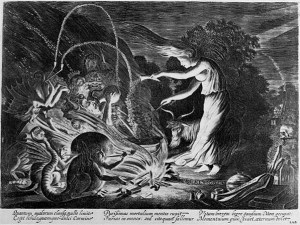
 An accompanying text reads: “What evils Desire commands, in the small secluded place; who, by sweet incantation, overcomes the minds of the purest mortals, induces frenzy in everyone! But how quickly it slips by; Death overtakes brief life, brief delights. Laughing for a moment, in eternity suffering regret.” (Translation by Ross Caldwell.)
Before you condemn these women you might want to read “Marriage or a Career?: witchcraft as an alternative in seventeenth century Venice” by Sally Scully (Journal of Social History, Summer 1995). Scully postulates that “witchcraft was a role available to women for managing their lives, operating as individual players on the social stage. To call it a career option may not be anachronistic.”
It should be noted that Isabella Bellochio was a staunch Christian who, in calling on the Devil to obtain her desires was merely “giving the Devil his due”—she knew she was doing something wrong in trying to coerce another to fulfill her own desires and so recognized this as the Devil’s work in his role as the lord of base, material desires. As Guido Ruggiero explained in Binding Passions: Tales of Magic, Marriage and Power at the End of the Renaissance (Oxford University Press, 1993), it did not signify for Isabella that she rejected Christ for the Devil. “I never understood”, she claimed, “that one had to pray to or honor the Devil but only that one must light a lamp to him in order to have that which one desired, that is in this case my lover. Thus I did not light it with the intention of worshiping or praying to him, but with the intention that my lover be made to come.” In a sense it was an honest acknowledgement that, in the context of Christianity, whenever you try to achieve your own desires at the expense of another you are doing the Devil’s work.
See also this report by Ross Caldwell on Spanish cartomancy and witchcraft from at least the 16th century – here.
Chicago Public Radio “This American Life” features a 12 minute audio essay “Act Two: Bar Car Prophesy” in which
Writer Rosie Schaap tells the story of how she ingratiated herself into the adult society of the Metroliner commuter train bar car as a teenager. She would cast Tarot card prophesies for riders, in exchange for beer. This was fun and made her feel grown-up, until the cards showed her something she wasn’t really ready to see.
Listen to the free streaming audio  here. This episode starts at minute 22:00 (that magic tarot number!); the tarot material at minute 25:00.
Rosie Schaap is an editor and writer at Guideposts, an inspirational magazine started by Norman Vincent Peale.
Is there any “true” way to lay the cards? Probably not. But here is the first tarot spread to appear in print. It is in an article by le Comte de M*** (Mellet) in Court de Gébelin’s Le Monde Primitif (1781). The spread instructions were followed by a sample interpretation—the dream of Joseph in the Bible. I decided that such a simple but powerful layout deserves to be brought back “into play.” Try it out for yourself.
The layout is best accomplished by two people working together, who have divided the deck into two stacks so that each has one of them:
Person 1 — the 56 Minor Arcana
Person 2 — the 22 Trumps (Major Arcana).
Each person takes their stack, shuffles it, and then simultaneously goes through the stacks card-by-card as follows:
Person 1: Turns the cards of the Minor Arcana over one-by-one while counting Ace, 2, 3, 4, … Page, Knight, Queen, King (use the court card names from your own deck), and continue counting with the Ace. Any card which has the same number or rank as that named is to be set aside. That is, if when counting 5, you turn over a 5 of any suit, that card is selected and put to the side.
Person 2: Goes through the Trumps at the same time, putting down a card each time Person 1 does so, but without turning it over. When Person 1 puts a card aside (because the number and the card matched), Person 2 takes the card he/she put down at the same time and turns it face up next to Person 1’s card to form a pair. When Person 2 has gone through all the Trumps, he/she picks up the reject stack and continues to put them down in the now-reversed order.
The process ends when Person 1 runs out of Minor Arcana cards.
Interpret the resulting cards as pairs.
 For example, in the first reading I did with this spread, the result of the count was:
Ace of Pentacles — Lovers
Ace of Cups — Sun
Three of Cups — Death
Knight of Wands — Star
These cards had an incredible feeling of power about them. My partner in the reading immediately said, “It’s all about the deaths!” and I realized he was right. We had just found out about the deaths of three people we knew (Three of Cups plus Death). Three incredible people—each making the transition (Knight of Wands) to another world in their own way. They were being shown to us as Beings of Light (the Sun) starting a new phase of existence (the two Aces). I was awed by the beauty of their souls that radiated out from these cards as if reborn in the spirit (the Sun). It was good to feel that they were with loved ones (Three of Cups and Lovers), and it seemed to me that they were riding (Knight of Wands) towards their highest destiny (Star). I took it as a message to us from the other side, saying that they were all right and just where they should be. (Deck: The Albano-Waite Miniature Tarot Cards.)
Although many tarot practitioners apply a Jungian psychological approach to their tarot work, there’s been a question as to whether Jung himself knew anything about tarot. In fact he did, and he would have liked to explore it more deeply but for a lack of hours in the day. Here are some of his references to the cards, although his tarot knowledge, especially of its history, was sorely lacking. Update: I’ve added brief notes by Jung on the Major Arcana here, and on “clouds of cognition” at the end of this article. 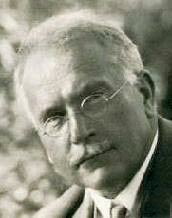
On 16 September 1930, Jung wrote to a Mrs. Eckstein:
“Yes, I know of the Tarot. It is, as far as I know, the pack of cards originally used by the Spanish gypsies, the oldest cards historically known. They are still used for divinatory purposes.”
[Jung was not always right: Current historical research does not support an original use of the cards by gypsies, nor were tarot cards the oldest known. The ordinary playing card deck (with many variations) preceded tarot by approximately 50 to 75 years. Tarot appeared first in Northern Italy roughly around 1440.]
On 1 March 1933, Carl Jung spoke about the Tarot during a seminar he was conducting on active imagination, demonstrating that he was a little more familiar with these images than we would have thought from just the preceding letter. This is a transcript of his actual spoken words:
“Another strange field of occult experience in which the hermaphrodite appears is the Tarot. That is a set of playing cards, such as were originally used by the gypsies. There are Spanish specimens, if I remember rightly, as old as the fifteenth century. These cards are really the origin of our pack of cards, in which the red and the black symbolize the opposites, and the division of four—clubs, spades, diamonds, and hearts—also belongs to the individuation symbolism. They are psychological images, symbols with which one plays, as the unconscious seems to play with its contents. They combine in certain ways, and the different combinations correspond to the playful development of events in the history of mankind. The original cards of the Tarot consist of the ordinary cards, the king, the queen, the knight, the ace, etc.,—only the figures are somewhat different—and besides, there are twenty-one cards upon which are symbols, or pictures of symbolical situations. For example, the symbol of the sun, or the symbol of the man hung up by the feet, or the tower struck by lightning, or the wheel of fortune, and so on. Those are sort of archetypal ideas, of a differentiated nature, which mingle with the ordinary constituents of the flow of the unconscious, and therefore it is applicable for an intuitive method that has the purpose of understanding the flow of life, possibly even predicting future events, at all events lending itself to the reading of the conditions of the present moment. It is in that way analogous to the I Ching, the Chinese divination method that allows at least a reading of the present condition. You see, man always felt the need of finding an access through the unconscious to the meaning of an actual condition, because there is a sort of correspondence or a likeness between the prevailing condition and
the condition of the collective unconscious.
“Now in the Tarot there is a hermaphroditic figure called the diable [the Devil card]. That would be in alchemy the gold. In other words, such an attempt as the union of opposites appears to the Christian mentality as devilish, something evil which is not allowed, something belonging to black magic.”[from Visions: Notes of the Seminar given in 1930-1934 by C. G. Jung, edited by Claire Douglas. Vol. 2. (Princeton NJ, Princeton University Press, Bollingen Series XCIX, 1997), p. 923.]
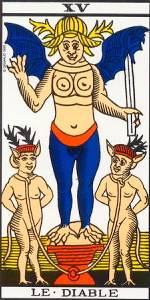
In The Archetypes of the Collective Unconscious (CW, Vol. 9:1, para 81), Jung wrote:
“If one wants to form a picture of the symbolic process, the series of pictures found in alchemy are good examples. . . . It also seems as if the set of pictures in the Tarot cards were distantly descended from the archetypes of transformation, a view that has been confirmed for me in a very enlightening lecture by professor [Rudolph] Bernoulli. The symbolic process is an experience in images and of images. Its development usually shows an enantiodromian* structure like the text of the I Ching, and so presents a rhythm of negative and positive, loss and gain, dark and light.” [*a Greek term used by Jung to mean ‘things turning over into their own opposite.’]
Dierdre Bair recounts in Jung: A Biography (Little, Brown, 2003, p. 549) that in 1950 Jung assigned to each of the four members of his Psychology Club an ‘intuitive, synchronistic method’ to explore. Hanni Binder was to research the Tarot and teach him how to read the cards. They determined that Grimaud’s Ancien Tarot de Marseille “was the only deck that possessed the properties and fulfilled the requirements of metaphor that he gleaned from within the alchemical texts.” Hanni Binder’s work amounted to very little as can be seen from her report preserved at the Jung Institute in New York. The group disbanded around 1954.
What was behind Jung’s attempt to gather all this material? Marie-Louise von Franz recounts in Psyche and Matter (1988) that toward the end of his life:
“Jung suggested investigating cases where it could be supposed that the archetypal layer of the unconscious is constellated*—following a serious accident, for instance, or in the midst of a conflict or divorce situation—by having people engage in a divinatory procedure: throwing the I Ching, laying the Tarot cards, consulting the Mexican divination calendar, having a transit horoscope or a geomantic reading done. If Jung’s hypothesis is accurate, the results of all these procedures should converge. . . . [*a Jungian term meaning ‘the coming together of elements in the unconscious so that they form a consciously recognizable pattern of relationships.’ Christine Houde adds, “The constellated material is activated in the psyche of the individual where it attempts to erupt into the field of experience.”]
“[This investigation would consist of] studying an incident (accident) by the convergence . . . of a multitude of methods, with the help of which we could try to find out what the Self “thought” of this particular accident. . . . The generally rather vague formulations of divinatory techniques resemble these “clouds of cognition” that, according to Jung, constitute “absolute knowledge.”
Von Franz further explains that Jung’s “clouds of cognition” represents an awareness on the part of our conscious intelligence of a far vaster field of information, an “absolute knowledge,” within the collective unconscious. These images, on the part of a “more or less conscious ego,” lack precise focus and detail. Thus, the realization of meaning has to be “a living experience that touches the heart just as much as the mind.” She continues:
“Archetypal dream images and the images of the great myths and religions still have about them a little of the “cloudy” nature of absolute knowledge in that they always seem to contain more than we can assimilate consciously, even by means of elaborate interpretations. They always retain an ineffable and mysterious quality that seems to reveal to us more than we can really know.”*
On 9 February 1960, about a year before he died, Jung wrote Mr. A. D. Cornell about the disappointing end to his grand experiment:
“Under certain conditions it is possible to experiment with archetypes, as my ‘astrological experiment’ has shown. As a matter of fact we had begun such experiments at the C. G. Jung Institute in Zurich, using the historically known intuitive, i.e., synchronistic methods (astrology, geomancy, Tarot cards, and the I Ching). But we had too few co-workers and too little means, so we could not go on and had to stop.”
The experiment proposed by Jung is discussed in the Journal of Parapsychology (March 1998): in an article titled: “The Rhine-Jung letters: distinguishing parapsychological from synchronistic events – J.B. Rhine; Carl Jung” by Victor Mansfield, Sally Rhine-Feather, James Hall. The authors conclude:
“Such an experiment fits our description of not being forced, controlling, or manipulating, but it presents its own difficulties. How, for example, can we convincingly show that the divinatory procedures in fact converge, that appropriate subjects were chosen when an archetype was actually constellated, that the data was taken without biasing the interpretation, and that other extraneous factors are not distorting the outcome? These problems are not insurmountable, but to do more than “preach to the converted,” this experiment or any other must be done with sufficient rigor that the larger scientific community would be satisfied with all aspects of the data taking, analysis of the data, and so forth.”
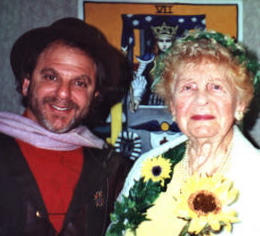
In 1984, Art Rosengarten (here shown with Tarot author, Eden Gray), as research for his doctoral dissertation, conducted an experiment very similar to the one described by Jung, in which he compared the tarot, TAT and dream interpretation. You can read about this experiment in his book, Tarot and Psychology: Spectrums of Possibility. I think Jung would have been pleased.
So what are we to make of all this?
Though not a direct focus of his energies, Carl Jung, nevertheless, recognized tarot as depicting archetypes of transformation like those he had found in myths, dreams and alchemy, and as having divinatory characteristics similar to the I-Ching and astrology. Most of all, Jung believed a person could use “an intuitive method” to understand—through tarot’s reflecting the collective unconscious into a “cloud of cognition”—the meaning in a present, prevailing condition.
See Jung’s own comments on the Major Arcana here.
ADDED: Here’s another statement by Jung on “clouds of cognition,” from the chapter, “On Life after Death,” in Memories Dream, Reflections, p 308. He states that in the “space-timelessness” surrounding an archetype there exists a diffuse cloud of cognition that contains “primorial images with many aspects” or “a “diffuse omniscience” but no discrete contents (that is, subjectless). For cognition to happen these potentialities [my word] have to be brought into space-time coordinates. Reading this entire chapter is absolutely essential to getting at what Jung saw as the source material for divinations.
“As I see it the three-dimensional world in time and space is like a system of co-ordinates, what is here separated into ordinates and abscissae may appear “there,” in space-timelessness, as a primordial image with many aspects, perhaps as a diffuse cloud of cognition surrounding an archetype. Yet a system of co-ordinates is necessary if any distinction of discrete contents is to be possible. Any such operation seems to us unthinkable in a state of diffuse omniscience, or, as the case may be, of subjectless consciousness, with no spatio-temporal demarcations. Cognition, like generation, presupposes an opposition, a here and there, an above and below, a before and after.”
For a different take, here is a bit of an interview with Jung on alchemy and predicting the future: “We can predict the future when we know how the present moment has evolved out of the past.”
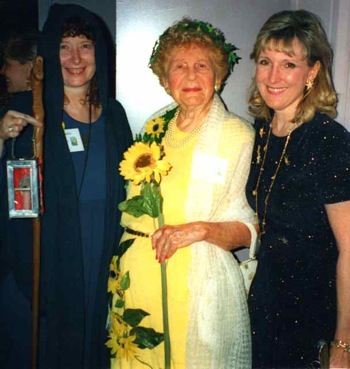
Eden Gray at the ’97 International Tarot Congress, dressed as the Sun, standing between Mary Greer as the Hermit and Barbara Rapp, organizer of the Los Angeles Tarot Symposiums.
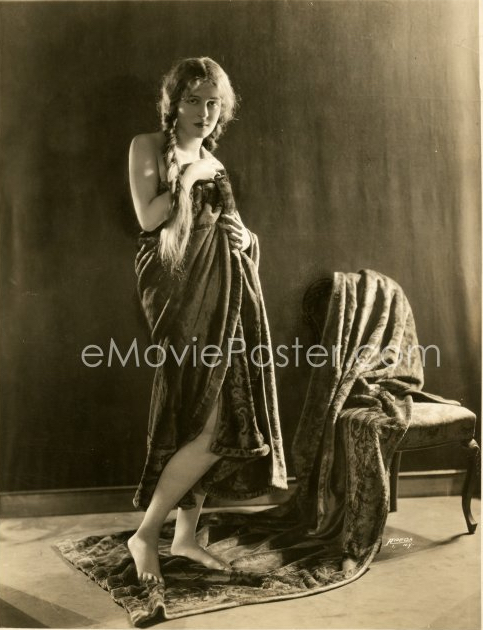
Eden Gray (born June 9, 1901) began life as Priscilla Pardridge, Chicago debutante and second cousin to Princess Engalitcheff, wife of the Russian vice counsel. Still in her teens, Priscilla decided to become a stage actor. Despite her family’s owning Chicago’s Garrick Theatre (as well as a major department store), her father “snatched her from the footlights,” so she took a menial job in another department store. Before long she slipped off to New York where, at nineteen years of age, and without her parents’ knowledge, she married fellow-Chicago poet, novelist and screenwriter Lester Cohen (who wrote the screenplay for Of Human Bondage among others).
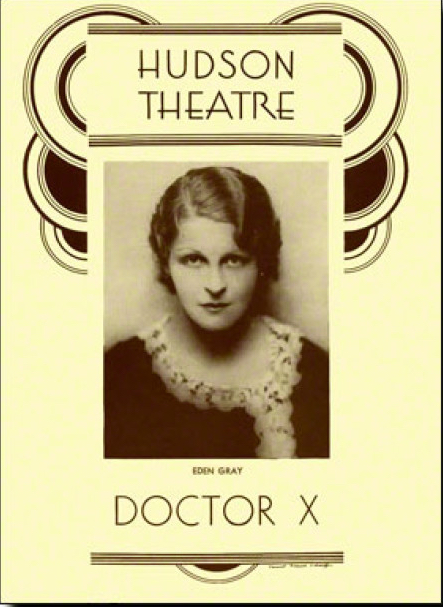
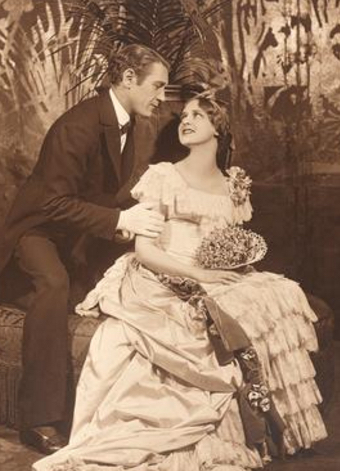 Adopting the stage name, Eden Gray, from 1920-1933 she was in a series of Broadway plays, including Edith Wharton’s The Age of Innocence, at New York’s Empire Theatre in 1928 (photo on right), and Doctor X on Broadway (see poster). She also performed supporting roles in three movies, being best known as Pamela Gordon in the 1925 film Lovers in Quarantine, and appearing as late as 1942 with Ronald Reagan in King’s Row (despite only a fleeting glimpse of her at a window in the film, she and Reagan shared an interest in positive thinking and astrology). In addition to all this she took a several year trip with her husband, which he described in his book, Two Worlds: An Account of a Journey around the World. During World War II, she put her acting career on hold to become a lab technician with the Women’s Army Corps.
After living in Pennsylvania, Virginia, Indiana, Paris and London and working in radio and on the London stage, Gray moved back to New York. She earned a doctorate of divinity degree from the First Church of Religious Science and then lectured and taught classes in Science of Mind. Gray also got to know librarian Gertrude Moakley who, since the early 1950s, had been researching tarot’s origins in Renaissance Italy (see bio of Moakley here).
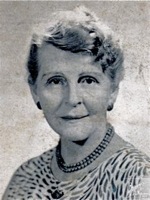 Eden Gray ran a bookstore and publishing company called “Inspiration House,” one of the few places where a person could buy tarot cards and take tarot classes in the late 1950s and ’60s. Her customers complained that the available books were not easy to understand, so she spent weekends in the country coming up with a more accessible way of approaching the cards.
Eden Gray self-published her first book, Tarot Revealed: A Modern Guide to Reading the Tarot Cards in 1960 to which she applied her “New Thought” perspective (see my earlier post here). She followed up her first success with two more tarot books: A Complete Guide to the Tarot (1970) and Mastering the Tarot: Basic Lessons in an Ancient, Mystic Art (1971). All feature graphics by her artist son Peter Gray Cohen. These books have remained continuously in print and are still among the best-selling tarot books today.
My personal favorite is Mastering the Tarot, as the card meanings are the richest of the three, and it gives practical demonstrations of interpreting the cards through sample readings. Lesson 18, “The Use and Misuse of the Tarot,” is a small gem of “New Thought” philosophy and positive thinking applied to the cards. Gray advises:
“So watch for the pitfalls when you read the cards; recognize how very suggestible everyone is—and then go ahead and use the cards for good. . . . Give those for whom you read encouragement to strive for their highest ideals. The seeds you plant can blossom into lovely flowers of accomplishment.”
Along with various editions of the Rider-Waite-Smith deck (de Laurence, University Books, Albano-Waite, Merrimack, U.S. Games, Inc.), Eden Gray’s tarot books formed the main impetus to the hippie adoption of the Tarot as spiritual guide for navigating a world-turned-on-its-head, leading directly to the booming Tarot Renaissance that began in 1969 and continues to this day.
It was Eden Gray to whom we owe the term “Fool’s Journey,” appearing as the title of the Epilogue in A Complete Guide to the Tarot. She explained:
“The Fool represents the soul of everyman, which, after it is clothed in a body, appears on earth and goes through the life experiences depicted in the 21 cards of the Major Arcana, sometimes thought of as archetypes of the subconscious. Let each reader use his imagination and find here his own map of the soul’s quest, for these are symbols that are deep within each one of us.”
In 1960 she had already alluded to the idea, saying that the Fool “must pass through the experiences suggested in the remaining 21 cards, to reach in card 21 the climax of cosmic consciousness or Divine Wisdom”—an idea that resonated deeply with the hippies—and that Gray probably picked up from A.E. Waite who wrote about the “soul’s progress through the cards.”
 In 1971, Gray moved to Vero Beach, Florida, where she focused on her art and spiritual ministry. She was a member of the Vero Beach Art Club and Riverside Theater and Theater Guild. In the 1990s several people contacted her about her earlier work in tarot, including Ron Decker and Janet Berres of the International Tarot Society. Berres honored Gray at their third International Tarot Congress in 1997 in Chicago with the Tarot Lifetime Acheivement Award. It was here that Eden Gray learned to her great astonishment just how truly revered she was for her seminal tarot books.
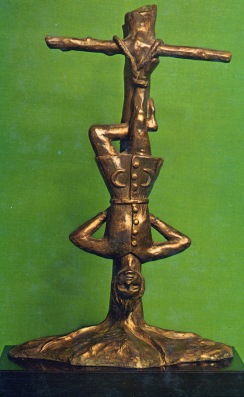
(I received this bronze statue of the Hanged Man created by Eden Gray (see right) from Barbara Rapp at the Los Angeles Tarot Symposium for recognition of my work in tarot. Read about it’s significance while writing my Tarot Reversals book here. Read more about Eden Gray here.)
This adventurous, pioneering woman, and “Godmother of the Modern American Tarot Renaissance” died peacefully in her sleep at 97 years of age, on January 14, 1999 in Vero Beach, having driven herself to the hospital following a minor heart attack.
Her books (with first publication date):
- Tarot Revealed (1960)
- Recognition: Themes on Inner Perception (1969)
- A Complete Guide to the Tarot (1970)
- Mastering the Tarot (1971)
- The Harvest Home Natural Grains Cookbook with Mary Beckwith Cohen (1972)
- The Harvest Home Fresh Vegetables Cookbook with Mary Beckwith Cohen (1972)
- Marbling on Fabric with Daniel and Paula Cohen (1990)
You can hear her briefly in this replay of a Long John Nebel talk radio program from New York in 1964 (thanks to Kim). Be warned that she only gets in a couple of sentences in a show totally dominated by Walter Martin who wrote an anti-cult/occult book from a Christian perspective. Supposedly she appeared on other Nebel shows but I can’t find them on the net.
Just found: Eden Gray as “Angela” in The Firebrand,1924-25. She played the model of the Renaissance artist Benvenuto Cellini. The play was described as: “a modern farce masquerading in the trappings of the Renaissance, or a comedy of the sixteenth century “jazzed up” to delight a 1925 audience.” You can also see another photograph of her here.
It is assumed that tarot readers use either psychic or intuitive abilities. In fact, these are, almost always, among their skills. Querents usually come for a reading because they are looking for information outside the normal, rational processes for obtaining it. They want that “something extra,” even if it’s just entertainment.
What I want to query today is:
• Why are ‘psychic’ and ‘intuitive’ so often conflated into a single thing? (A web search on psychic + intuitive should convince you that the words often appear together to express the same thing.)
• As tarot readers do we know when we are using psychic rather than intuitive faculties and vice versa?
The terms psychic and intuitive actually describe two different processes that could be seen as opposite ends of a spectrum. One can even trigger another. By using both words together or interchangeably we attempt to cover all bases. Can we improve our skill in using these abilities? Yes. But it helps to differentiate between them— at least while developing them as skills.
Psychic is usually described as “extra sensory perception.” It accesses information beyond the reach of our normal senses. Thus, it is deemed paranormal; a sixth sense. The term psychic was first used by the French astronomer Camille Flammarion in the 1860s and, soon after, by the chemist William Crookes to describe the spiritualist medium Daniel Douglas Home. Originally it implied seership, prophecy or mediumship. Now it refers to a broad range of abilities including telepathy, clairvoyance, clairaudience, and precognition.
Psi research (parapsychology) has amassed enough evidence to convince all but a few of the most skeptical scientists, who have examined this evidence, of its existence. Even the CIA and then the military had what they called a “remote viewing” program from the early 1970s until 1995.
Intuition, on the other hand, is the completely normal functioning of human cognition. It is part of a bodily survival mechanism. It has been called gut feeling, a hunch, instinct or insight. It involves intelligence at work without conscious thought. Essentially it is the act or process of coming to direct knowledge without reasoning or inferring. With intuition we sense truth without explanations. Using unconscious forms of analogy and induction we instantly perceive connections and patterns. This sometimes results in a clear direction for action.
Both psychic awareness and intuition communicate to us through symbols, sensory feelings and emotions, which is one reason why they may be so hard to separate. With intuition, however, we can sometimes justify our hunches by backtracking and discerning sensory input and mental connections that only make sense after the fact. By contrast, with a true psychic impression a direct connection simply doesn’t exist, except, perhaps, when interpreting feelings and symbols in which the psychic impression can be cloaked.
I highly recommend two books for understanding and developing your intuition:
• Gut Feelings: The Intelligence of the Unconscious by Gerd Gigerenzer.
• The Gift of Fear: Survival Signals that Protect Us from Violence by Gavin de Becker.
Gerd Gigerenzer is a director of the Max Planck Institute for Human Development. His research was a major source for Malcolm Gladwell’s bestseller Blink. In Gut Feelings, he describes intuition as a judgment that appears quickly, whose underlying reasons we are not fully aware of, yet is strong enough to act upon. “It ignores information, violates the laws of logic, and is the source of many human disasters.” On the other hand, as Gigerenzer shows, it can outwit the most sophisticated reasoning and computational strategies.
Intuitional skills can be learned. Gigerenzer explains how it often works through simple rules of thumb that take advantage of cognitive abilities, recognition memory, social instincts, and visual tracking.
Gavin de Becker, in The Gift of Fear, says, “Intuition is the journey form A to Z without stopping at any other letter along the way. It is knowing without knowing why.” True, this book focuses on high-stakes predictions: how to spot subtle signs of danger to avoid violence. Yet, it is one of the best and most compassionate books I know that tells you how to recognize and when to trust intuition.
How do you tell the difference between fear that is true and fear that is unwarranted? “Intuition is always learning,” de Becker tells us, “and though it may occasionally send a signal that turns out to be less than urgent, everything it communicates to you is meaningful. Unlike worry, it will not waste your time.”
Intuition comes to us through emotions, persistent thoughts, physical sensations, wonder, anxiety and humor. De Becker’s “elements of prediction,” along with Gigerenzer’s “rules of thumb,” can help you make better decisions than just relying on reason alone.
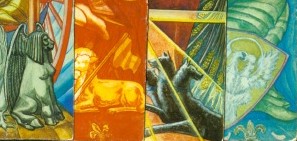
Intuition can arise during a tarot reading in countless ways. One of these is when symbols in several cards suddenly seem to come forward and link together to reveal a repeating or developing theme. Everything else can appear to recede in the face of the insistence and aliveness of these symbols. In face-to-face readings, subtle clues from the querent—including things picked up from so-called “cold reading”—will echo meanings in the cards, creating a kind of resonance. Words said by the querent can ring with truth, especially when they match keywords for cards in the spread.
Tarot readers can become much more aware of when and how they access intuition in a reading. They can then help a querent recognize when the querent’s own intuitions have been activated and may contain valuable truths.
The picture above is an amalgam of four cards from the Crowley-Harris Thoth deck. Can you identify them?
I’ll write later about psychic development and another important ability in reading tarot, empathy.
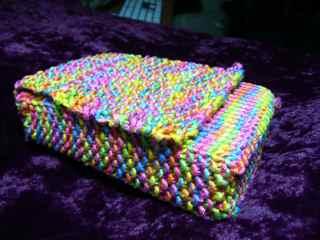 Well, I think I’ve come up with just about my perfect knitted tarot bag design, although I’m still looking for the ideal yarn. My bags are fitted and have squared-off sides and bottom—you could almost call them cases rather than bags. Pictured are two versions in cotton. I think I’ll try a hemp yarn next as its slight stiffness might give a little more body to the case.
First I knit a sample to get the yarn’s gauge (using smaller needles than the yarn normally calls for). I determine the number of stitches to match the deck’s measurements plus about 1/8″ to 1/4″ for each dimension.
 I knit the flap in seed stitch (Row 1: k1p1; Row 2: p1k1)* so it will lie flat. When the flap, including top edge, is long enough, I cast on enough additional stitches to knit the rest of the bag in the round with 5 double pointed sock needles. (Note: Plan on adding 1 or 2 stitches to the front and back needles as the seed stitch used on the flap is wider than stockinette stitch.)
Needle 1 = knit side stitches in seed stitch; needle 2 = front stitches in stockinette; needle 3 = side stitches in seed stitch; needle 4 = back stitches in stockinette (the back continues directly on from the flap). Optional: My needle 2 (front stitches) begin with 3 rows of k1p1 ribbing to keep the top edge from curling.
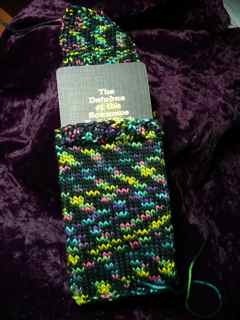 In order to have a nice flat bottom I end the body with a purl row to define the edge. My bottom is stockinette with the purl side out. You want to be positioned to begin a needle 1 (side) row. Pick up the adjacent stitch from the back (needle 4) and purl together with the first stitch of needle 1. Purl until one side stitch remains on needle 1; purl it together with the adjacent stitch from the front (needle 2). Turn the work. Knit together the next stitch from needle 2 with the first stitch on needle 1. Knit the rest of the stitches on needle 1 except one. Knit this last stitch together with a stitch from needle 4. Turn the work. Repeat as above until you reach the other end of your case and meet the stitches on needle 3. Knit the stitches from needles 1 & 3 together using a Kitchener Stitch. (Note: you may need to turn the bag inside out in order to do the Kitchener Stitch. This is better anyway as the final row will have the purl side out.)
I then weave the beginning and ending tails of yarn to a center point on the front edges so that the tails become ties for securing the center of the top flap to the center bottom edge.
Happy knitting. All suggestions for yarns or improvements are gratefully accepted.
See the earlier version of my tarot case and links to other tarot bags here.
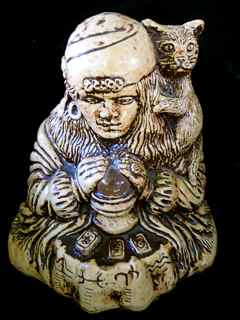 Do a Google search on the words ‘psychic + tarot’ and you’ll come up with 370,000 entries, the majority of which are professional readers advertising their skills. One person offers an “intuitive, psychic tarot reading.” Others list themselves as an “empathic, intuitive, psychic tarot reader,” a “gifted psychic reader,” and a “psychic medium who uses the tarot”. The claims are sometimes outrageous—“99% accurate psychic predictions,” “only the truth,” “world renown,” “specializing in reuniting loved ones,” and “love and money spells” to remove curses—all indicators that you should beware of what you’re getting into. One characteristic of a psychic tarot reading, it seems, is that you won’t find interpretations that come out of a book; instead these are “cosmic insights,” “channeled wisdom,” or clairvoyance. (I bought this statue when Tarot for Your Self first came out—to celebrate the day.)
Search on ‘intuition or intuitive + tarot’ and there are 385,000 entries. There are an additional 216,000 listings for ‘Tarot Reader’ that do not use the terms psychic, intuitive or intuition. And, 225,000 listings for either a ‘tarot consultant or counselor’ with all previous words eliminated. By contrast, a search on Tarot alone results in thirty-two and a half million entries.
Intuitive tarot, when the word ‘psychic’ has been eliminated, emphasizes listings for decks, books, articles and courses, but there are still plenty of ads for readings. These readers are somewhat more likely to advertise themselves as spiritual counselors or consultants (who might also practice Reiki or coaching or “down-to-earth guidance”). But descriptions still feature an aversion to interpretations found in books: “An intuitive approach to tarot reading places the power within,” while a book meaning “denies the power within.” Intuitive tarot involves “that gut feeling or first instinct that comes to you when you look at a card. . . . It is a gut reading more so than regurgitation of memorized definitions.”
Self-styled ‘tarot counselors’ (when eliminating the intuitive and psychic words) seem to have an altogether different vibe. They use tarot “as a therapeutic method and means for self-realization,” “for drawing out information lying deep inside,” and “for helping someone to clearly see a particular present situation.” Sessions are “designed to bring personal fulfillment . . . to assist and guide, to empower and uplift.” Book meanings are sometimes acknowledged as helpful for their depth, wisdom and guidance.
‘Therapeutic tarot’ or ‘tarot therapy’ seems to focus on healing modalities including massage and Reiki in addition to such counseling skills as “assisting you in reaching your goals [and to] gain clarity.” The querent’s projections (ascribing one’s own feelings, thoughts, attitudes or situation to another person or thing) are often described as a major method for determining the significance of the cards.
A search on ‘tarot + projection’ turned up an interesting report from Quirk’s Marketing Research Review called “Heart Maps and Tarot Cards” by Steven Richardson. It describes how tarot cards have been used to help medical doctors talk about the influence of marketing in their disease treatment decision-making processes:
“Tarot cards serve as unique picture-sort stimuli for images and archetypes (but are not used as actual tarot cards for readings, just for the symbolism). In this technique, ask physicians to thumb through the cards quickly and come up with ones that describe or dramatize how they personally feel about being a doctor in the practice of medicine as it relates to a particular disease state. . . . In another study conducted by [Myra] Summers, the tarot card technique was helpful in understanding doctors’ attitudes towards treating terminally ill patients (though Summers also does not use the cards as they are used in tarot readings). The technique revealed meaningful insight into the emotional distress a number of oncologists experience every day.”*
Notice how quick the author is to disassociate this use of cards from tarot readings. Yet, how many tarot readers would claim that such insights are precisely what they turn to the cards for?
I plan on writing much more on this topic, but will leave it for now. I encourage you to write in comments on your own thoughts on this subject.
*You can see a Power Point Presentation (ppt) by Pat Sabena and Nicole Sabena Feagin on their landmark research study using tarot, called “Getting Doctors to Spill their Guts” – here.
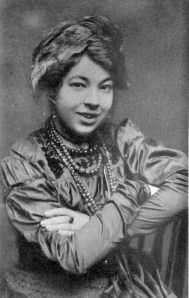
Pamela Colman Smith (also known as Pixie), artist of the Rider-Waite (Smith) Tarot deck, wrote nothing about the deck she created except in a letter to her mentor, Alfred Stieglitz, “I just finished a big job for very little cash!” She did tell us, however, in an article called “Should the Art Student Think?,” what must have been her own approach to reading the cards. This is the core of my own reading style.
“Note the dress, the type of face; see if you can trace the character in the face; note the pose. . . . First watch the simple forms of joy, of fear, of sorrow; look at the position taken by the whole body. . . . After you have found how to tell a simple story, put in more details. . . . Learn from everything, see everything, and above all feel everything! . . . Find eyes within, look for the door into the unknown country.”*
Essentially, she’s suggesting the following steps:
- Describe the card literally.
- Describe what seem to be the emotions, style and attitudes of the people on the card.
- Physically embody the card—act it out.
- Make up a story about what’s happening and turn it into a first person account (so you are feeling everything yourself).
- In your mind’s eye, step over the border of the card (through the door).
- Enter into that world, seeing beyond the borders to things you never knew were there.
In my opinion, this is the best way to discover what these cards mean for you in any situation.
*“Should the Art Student Think?” by Pamela Colman Smith in The Craftsman 14:4 (July 1908), pp. 417-19. Read the article here. See also my post on the Art of Pamela Colman Smith.
Tree of Life on the Tarot in the Four Worlds
I am delighted to provide this previously unpublished text, which is from a hand-copied manuscript of Sub Spe [John Brodie Innes] I apologize to those who will find many of the references difficult, but the information can help greatly in understanding the Golden Dawn approach to the Minor Arcana and also the Rider-Waite-Smith and Crowley’s Thoth decks. A glossary of Golden Dawn terms is available at The Hermetic Order of the Golden Dawn website (click on H.O.G.D. Dictionary in the directory).
General Scheme:
The Breath of God passes down through the Four Worlds of the Qabalah from the purely Spiritual to the absolutely material. In each world there is a Tree of Life and the Breath passes down from Sephira to Sephira from Kether to Malkuth and thence to the Kether of the new lower World.
Atziluth, Yetzirah, Briah, Assiah (Wands, Swords, Cups, Pentacles).
Thus in Atziluth the Archetypal World it passes from Eheieh the Creative Breath to Adonai Malekh. This gives its impulse to Kether of Briah the Archangelic World, and in this plane it passes from Metatron the Male Kerub to Sandalphon the Female Kerub. This in turn gives its impulse to Kether of Assiah the Astral Plane where it is received by Chaioth ha Qadesh. The Holy Living Creatures, i.e. the Zodiac which is a wheel or Vortex and goes down to Ashim the Souls of Fire. The work of this Plane being to disintegrate the Astral Form that it may pass through the veils of Negative Existence and be reborn on the Material in Kether of Assiah. Here it is received by Rashith ha Gilgalim the Primum Mobile or Lord Kelvin’s “Vortex ring” and passes down to Cholem Yesodoth. Material Wealth. Malkuth of Assiah.
Thus we have four Trees one above the other containing 40 Sephiroth; i.e., the 4 Aces & 36 small cards of the Tarot arranged in 4 suits corresponding to the Worlds, each attributed to a Planet in a Decanate, and ruled by 2 Angels of the Shemhamaphoresch. This allocation of symbols gives the meaning ascribed to each card.
[The results and names of the cards are arrived at by combining the meanings of the numbers, with the meanings of the suits and interpreting by the Kabbalah. I have added clarifying material from other sources in brackets[ ]. Tarot card illustrations are from the Golden Dawn Whare Ra deck. —mkg]
Meaning of Numbers:
2. unites the Forces of the Positive and Negative, the King and Queen of the suit. Hence it signifies a beginning or Initiation.
[Unites forces of King and Queen, Fire & Water, Postive & Negative = reflection, love, pleasure, harmony. Chokmah is exalted above every head. Sphere of Wheel of Change and the Zodiac.]
3. produces the Prince. The Resultant of that union. A spiritual card.
[Produces the Prince (resultant (perfect manifestation) of union of King and Queen). Saturn = steadiness and restraint.]
4. produces the Princess. The Realization making the matter fixed or settled. Often taken as a new beginning. A material card.
[The Princess. Realization (4) of Power (Jupiter). Makes the matter fixed and settled. Chesed = the receptacle of all the Holy Powers and from it emanates all the Virtues).]
5. compounded of the first odd and the first even numbers denotes Opposition.
[Sphere of Mars. 5 = opposition, strife. Geburah = severity. Unites Wisdom and Knowledge.]
6. called by Nichomachus the form of form and by the Pythagoreans the Perfection of Parts, is taken to imply Accomplishment.
[Sphere of Sun = power, rank, rule. 6 = Accomplishment. Tiphereth = Mediating Intelligence for it causes that influence to flow into all the Reservoirs of Blessings.]
7. in Hebrew called ShBV Shibo or abundance unites the spiritual 3 to the material 4 and signifies a Supernal Force, also a possible result to be obtained by skill and courage.
[Sphere of Venus = external (outer) splendour. Netzach = the Refulgent Splendour of all Intellectual Virtues. Force transcending the material plane.]
8. The first cube of energy and the only evenly even number in the decade. Signifies material success, but sterile – not heading further. Solitary successes.
[Sphere of Mercury = Genius. Hod = Solitary Successes. 8 = Feeble Force, lacks initiative. Martial force without restraint.]
9. The triple Three, the first square of the odd number, of the Spiritual three. No further elementary number is possible hence it is like the horizon. All other numbers are bounded by it. Hence it implies Fundamental Force.
[Sphere of the Moon which governs the Waters of earth, the feminine & negative. 9 = a strong fundamental force. Yesod – the Path of Pure Intelligence.]
10. The beginning again of the decimal scale. Completed Force.
[Sphere of the Elements/Earth. Fixed and completed force. Power exercised in material things only.]
The 4 Aces are always the Roots of the Powers of their element. For other meanings see “Extracts from Book T., given in Ritual N.”
Note:
YOD-HE-VAU-HE is the Supreme God of the Plane of Earthly life governing material, mental and psychic forces by immutable laws. The “God” of the Old Testament.
ELOHIM = the Guiding Spirits who under YHVH sway the material forces. Always used collectively and usually translated Lord.
The ELOHIM contact humanity. YHVH does not – directly.
ADONI = the Planetary God of Earth. To a certain extent answers to Christ when looked at from his Human aspect, but recognising His Divinity. YHShVH is His Divine Aspect.
 WANDS – The Tree of Life in Atziluth
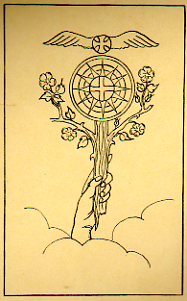
Ace of Wands: (Kether of Atziluth, Root of the Powers of Fire) Eheieh is the Creative Sigh, the Divine outbreathing – the Eastern Hamsa. The Greek [_?_]. The Spirit of God in Genesis. By this Divine Life first enters the Kether of the highest of the Four Worlds and penetrates to Malkuth of the Lowest. In the Tarot this influence comes from the Keys to the Ace of Wands.
Two of Wands: (Chokmah of Atziluth, Lord of Dominion, Mars in Aries) Unites forces of King & Queen. The Union of Fire & Water. The Spirit of Yod [Jehovah] on the face of the Water. Chokmah is exalted above every head. Mars in Aries representing the decanate is absolutely powerful. Hence influence over others. Good or bad according to dignity.
Three of Wands: (Binah of Atziluth, Established Strength, Sun in Aries) Produces the Prince. Resultant of union of King and Queen. Here the union of the Earth God Yod-He-Vau-He with the Lords of Creation Binah Elohim is the basis of Primordial Wisdom. The forms of Faith and its Roots. Amen. Sun the center of Power to the Earth in the fiery Aries give realization of hopes of energy = Established Strength.
Four of Wands: (Chesed of Atziluth, Perfected Work, Venus in Aries) Produces the Princess making the matter fixed and settled. EL is the definite article. The absolute. Chesed is the receptacle of all the Holy Powers and from it emanates all the Virtues. Venus in the fiery Aries has her full fruition. Hence have we perfected work.
Five of Wands: (Geburah of Atziluth, Strife, Saturn in Leo) Opposition. Elohim Gebor is the Lord of Severity [and battles]. He intensifies opposition. Geburah is itself severity. It unites Wisdom and Knowledge. Here gloomy Saturn dulls the light of Leo hence we get Strife. Ultimate success or failure is otherwise [elsewhere] shown.
Six of Wands: (Tiphareth in Atziluth, Victory, Jupiter in Leo) Accomplishment. The dual influences of the Earth God and the Directing Lords of Creation Elohim [Jehovah Aloah va Daath] directed to NETZACH or Knowledge give absolute success to skill and courage. Jupiter power in the shining light of Leo completes the idea. Tiphereth is the Mediating Intelligence for it causes that influence to flow into all the Reservoirs of Blessings. Hence is Victory after Strife.
Seven of Wands: (Netzach in Atziluth, Valour, Mars in Leo) A possible result. A force transcending the Material Plane. Mars in Leo gives this a martial direction. Jehovah Tzabaoth the Earth God of Hosts shows terrific force but restrained. Netzach is the Refulgent Splendour of all Intellectual Virtues. The sum of all these gives Valour.
Eight of Wands: (Hod in Atziluth, Swiftness, Mercury in Sagittarius) Solitary Successes. The Name is the Lord of Armies Elohim Tzabaoth. Martial Force without restraint. Mercury in the fire of the Sagittarius Centaur also gives the idea of too much force suddenly applied. Swiftness of the horse but running nowhere. Success but leading to nothing.
Nine of Wands: (Yesod of Atziluth, Great Strength, Moon in Sagittarius) Strong fundamental force Shaddai el Chai = the Vast & Mighty One. Both are of the same character but less fierce than the 10. The gentle Moon somewhat restrains the fire of the Centaur Sagittarius – it giving great strength but benignly used. The Sephiroth is the Path of Pure Intelligence.
Ten of Wands: (Malkuth of Atziluth, Oppression, Saturn in Sagittarius) Fixed and completed force. Adonai Malekh = The Power of Earth as a King. The two give to the Fire of Wands an overpowering Force which = Cruelty. Gloomy Saturn rides but does not control the fire of the Centaur Sagittarius which is the Airy Fire. Such fierce blast of Fire whirls to the Male Kerub, Metatron, in Kether of Briah. [The Divine Impulse … by growing materially powerful becomes sheer cruelty and oppression.]
CUPS – The Tree of Life in Briah
Ace of Cups: (Kether of Briah, Root of the Powers of Water) The Right Hand Male Kerub [Metatron] receives the influences from Adoni Malekh. See Key Table for further information.
Two of Cups: (Chokmah of Briah, Love, Venus in Cancer) Unites the King and Queen. Positive and Negative forces of Love and Pleasure. Ratziel the Archangel of the forces of a Vortex or wheel gives Power. Venus in Cancer is especially Venusian. All the Ideas tend in the same way to the unmodified and uncombined ideas of Cups – Love.
Three of Cups: (Binah of Briah, Abundance, Mercury in Cancer) Produces the Prince. = Abundance resulting from Love. Tzaphkiel has to do with forces of Saturn giving the steadying quality to Mercury, the versatility which qualify the overstrong cup-action making it fruitful.
Four of Cups: (Chesed of Briah, Blended Pleasure, Moon in Cancer) Produces the Princess. Realisation. Tzadkiel is the power of Jupiter so far good, but Moon in Cancer gives change and instability. Happiness approaching an end. Too passive to be perfectly complete.
Five of Cups: (Geburah of Briah, Loss in Pleasure, Mars in Scorpio) Opposition neutralises the force of Cups. Khamael is the Archangel of the Mars forces. Quarrels and fighting – the antithesis of Love. Mars in Scorpio = the stirring up of stagnant water. All intensify the idea. End of Pleasure. Sadness. Deceit. Treachery in Love.
Six of Cups: (Tiphareth in Briah, Pleasure, Sun in Scorpio) Accomplishment. Raphael is the Archangel of the Sun. United influence brings to pass what is wished – e.g. on the material plane. Sensual Pleasure. The influence of Sun in Scorpio is enervating breeding corruption. If Sun is strong – vanity, etc.
Seven of Cups: (Netzach in Briah, Illusionary Success, Venus in Scorpio) A possible success. The Supernal Forces Haniel is the Archangel connected with the Venus forces. Success is only outward. Supernal forces bring it to nothing. Nogah the sphere of Venus represents external splendour. Venus in Scorpio the gleam on stagnant water. All repeat the idea.
Eight of Cups: (Hod in Briah, Abandoned Success, Saturn in Pisces) Solitary Success. Michael the Archangel of Fire is too strong for the feeble force of the 8. Saturn in the airy Pisces gives indolence and dispondency. The whole shows temporary success abandoned as soon as gained.
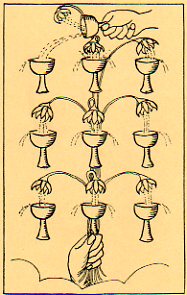 Nine of Cups: (Yesod of Briah, Material Happiness, Jupiter in Pisces) Strong fundamental force. Gabriel is the Archangel of Water on the material plane. He presides over birth and generation. Hence he was announcer of the birth of Christ and of John the Baptist. More material than Sandalphon as 9 is less complete than 10. Jupiter is not such a perfect combination with Pisces as Mars, so this card is almost perfect happiness.
Ten of Cups: (Malkuth of Briah, Perfected Success, Mars in Pisces) A fixed and Completed Force. Sandalphon, the Female Kerub, an Archangel yet Chief of the Angels. Showering influence of Chaioth ha Qadesh [Kether] – being the Female Kerub receiving its influence from above and transmuting it to the Zodiac, the Wheel of material creation. Mars gives the balance of Fire; Pisces that of Water. Hence this is an extremely good and fortunate card.
SWORDS – The Tree of Life in Yetzirah
Ace of Swords: (Kether in Yetzirah, Root of the Powers of Air) The Holy Living Creatures [Chaioth ha Qadesh], represent the Zodiac itself as Chokmah of Assiah represents its sphere. Hence a vortex receiving the influence through the veils of the negative from Malkuth of Briah which is Perfected Happiness.
Two of Swords: (Chokmah of Yetzirah, Peace Restored, Moon in Libra) Unites King and Queen thus producing Harmony. Auphanim is the Wheel of Change. Thus the Angels of the Revolving Symbolism restore peace. The gentle influence of Moon on Libra fiery air, restores and pacifies.
Three of Swords: (Binah of Yetzirah, Sorrow, Saturn in Libra) Produces the Prince. = The beginning and ending. Giver of Death. Aralim called Thrones more properly. Heroes intensifies the Prince. Hence Sorrow. Gloomy Saturn in fiery Air repeats the idea.
Four of Swords: (Chesed of Yetzirah, Rest from Strife, Jupiter in Libra) Realization. Chasmalim = a brillant metal, perhaps gold or silver. The Angels characterised by brightness [Shining Ones]. The realization of Brilliance. Thus = Rest after Strife. Jupiter Power in Libra fiery Air. Holds its heat restrained. This repeats the idea.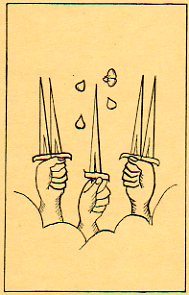
Five of Swords: (Geburah of Yetzirah, Defeat, Venus in Aquarius) Opposition. Strife. Seraphim = Angelic Beings whose character is burning or Fire [fiery serpents]. There is nothing to modify the fiery heat of strife which must bring defeat. Venus in the soft nature of Watery air succumbs to any Force.
Six of Swords: (Tiphareth in Yetzirah, Earned Success, Mercury in Aquarius) Accomplishment. Malachim – King Forces & those who obtain success by commanding it. Hence success not by luck but by effort. Mercury = Genius. Versatility acting on the plastic material of watery Air strives for and obtains success.
Seven of Swords: (Netzach in Yetzirah, Unstable Effort, Moon in Aquarius) Forces transcending the material Plane. Elohim = the idea of strength; hence effort but Supernal Forces overcome & render it unstable. Aquarius – Watery Air acted on by the inconstant Moon increases this result.
Eight of Swords: (Hod in Yetzirah, Shortened Force, Jupiter in Gemini) Solitary Successes. Beni Elohim = Sons of God. A lower and inferior order of Angels. Not able to prevail against the restrictions of the number 8. Jupiter = Power, but having only the Airy Air of Gemini as a basis, cannot exert Power to the full.
Nine of Swords: (Yesod of Yetzirah, Despair and Cruelty, Mars in Gemini) 9 = A strong fundamental force. Cherubim = Sphinxes compounded of the Elements. The supporters of Diety who fly with a swooping or circling motion, the beginning of a whirl, outcasting answering to Rashith ha Gilgalim [Kether’s First Swirlings]. The strong force tending to break up, appears like cruelty & despair. Mars has his full unmodified sway in the Airy Air of Gemini.
Ten of Swords: (Malkuth of Yetzirah, Ruin, Sun in Gemini) 10 = a fixed & completed force. Ashim = the Souls of Fire. These complete their work, which is to break up, disintegrate and ruin the Astral form that it may pass through the negative veils to be reborn in Kether of Assiah. Sun = very fiery energy, destructive unless it acts on very solid material & is modified. Acting on Gemini the tenuous or most Airy Air it is destructive. Compare the deadly arrows of Apollo. [Here the ideas take form, but the Astral Shells are broken up in Ruin by the Souls of Fire that the forms may be reborn in the Material.]
PENTACLES – The Tree of Life in Assiah
Ace of Pentacles: (Kether in Assiah, Root of the Powers of Earth) All Aces are the roots of the Powers of their Element. The Primum Mobile [Rashith ha Gilgalim] Beginning of Whirlings = Primary Vortex Ring. This is the Germ of all Matter (vide Lord Kelvin).
Two of Pentacles: (Chokmah of Assiah, Harmonious Change, Jupiter in Capricorn) Unites King and Queen. The Sphere of the Zodiac counter charges all. All forces acting on Earth. Jupiter = Calm Power on Capricorn = Barren Earth. Gives Harmonious Change but no product.
Three of Pentacles: (Binah of Assiah, Material Works, Mars in Capricorn) Produces the Prince = The perfect manifestation of the forces of Earth. The Sphere of Saturn [Shabathai= rest] restrains his influence. Mars shining on Capricorn the barren earth brings about material works and no more.
Four of Pentacles: (Chesed of Assiah, Earthly Power, Sun in Capricorn) 4 = Realization. Sphere of Jupiter = Power [Tzadekh = righteousness]. Thus the realization of Power. Sun = Power and force on Capricorn = a barren and desert land. Dominates, but leads to nothing beyond.
Five of Pentacles (Geburah of Assiah, Material Trouble, Mercury in Taurus) 5 = Opposition & Strife. Sphere of Mars [Madim = vehement strength] accentuates this. Mercury = Genius but etherial and erratic. Quite unable to deal with the dull heavy earth of Taurus.
Six of Pentacles: (Tiphareth in Assiah, Material Success, Moon in Taurus) 6 = Accomplishment. Sphere of Sun = Power, Rank, Rule [Shemesh = Solar Light]. These give abundant success. Luna in her exaltation of Taurus. The Mistress of the Floods. Breaking up the dull heavy earth under the influence of Sun = Great fertility.
Seven of Pentacles: (Netzach in Assiah, Success Unfulfilled, Saturn in Taurus) Force transcending the material Plane. Nogah = Sphere of Venus = External Splendour. The outside fair, but Supernal Force destroys the promise. The gloom of Saturn on the heavy dull earth of Taurus gives no success in farming.
Eight of Pentacles: (Hod in Assiah, Prudence, Sun in Virgo) Solitary Successes. Sphere of Mercury = Genius [Kokab = The Stellar Light]. This when only ocasionally successful is over careful. Sun = prudence and punctuality in Virgo the fertile earth gives success in farming. Mercury unrestrained by the forces of 8 lacks initiative energy.
Nine of Pentacles: (Yesod of Assiah, Material Gain, Venus in Virgo) 9 = A strong fundamental force. Levanah = Sphere of the Moon which governs the Waters of earth. A force which governs the feminine & negative is usually termed luck. This = gain. Venus the generative power in Virgo the fertile earth = material increase.
Ten of Pentacles: (Malkuth of Assiah, Wealth, Mercury in Virgo) 10 = Fixed and completed force. Sphere of the Elements [Cholem Yesodoth] = Power exercised in material things only . Mercury extremely versatile genius employed in Virgo = the fertility of the earth. Therefore successful completion of material gain = Material Wealth. Malkuth of Assiah. There is nothing human below this. [The acme of worldly prosperity and progress.] (Hereafter it must take an upward curve or pass out to The Qlippoth.).
[Note: the following zodiacal attributes relate to the elemental qualities of the decanates and the cards associated with those decanates. mkg]
Aries: Ascending Flames. A Great and Ruling Force.
Leo: Rushing Flames. A Force Wise.
Sagittarius: Darting Flames. A Force Great and Potent.
Taurus: Fertile land in a valley. A Force Exalted.
Virgo: Undulating land and low hill. A Force Just.
Capricorn: Precipitous, rocky and barren land. A Force Strong and Mighty.
Gemini: Cirrhous and flecked cloud. A Powerful Force.
Libra: Cumulo-stratous clouds. A Force Illustrious.
Aquarius: Rain descending from clouds. A Force Manifesting and Manifested.
Cancer: Eddies of swirling water. A Force that renders Powerful.
Scorpio: Undulating surface of water. A Wisely Dispensing Force.
Pisces: Breaking waves of the sea. A Force Avenging.
 Mary K. Greer has made tarot her life work. Check here for reports of goings-on in the world of tarot and cartomancy, articles on the history and practice of tarot, and materials on other cartomancy decks. Sorry, I no longer write reviews. Contact me
 Mary K. Greer's Tarot Blog
Recent Comments