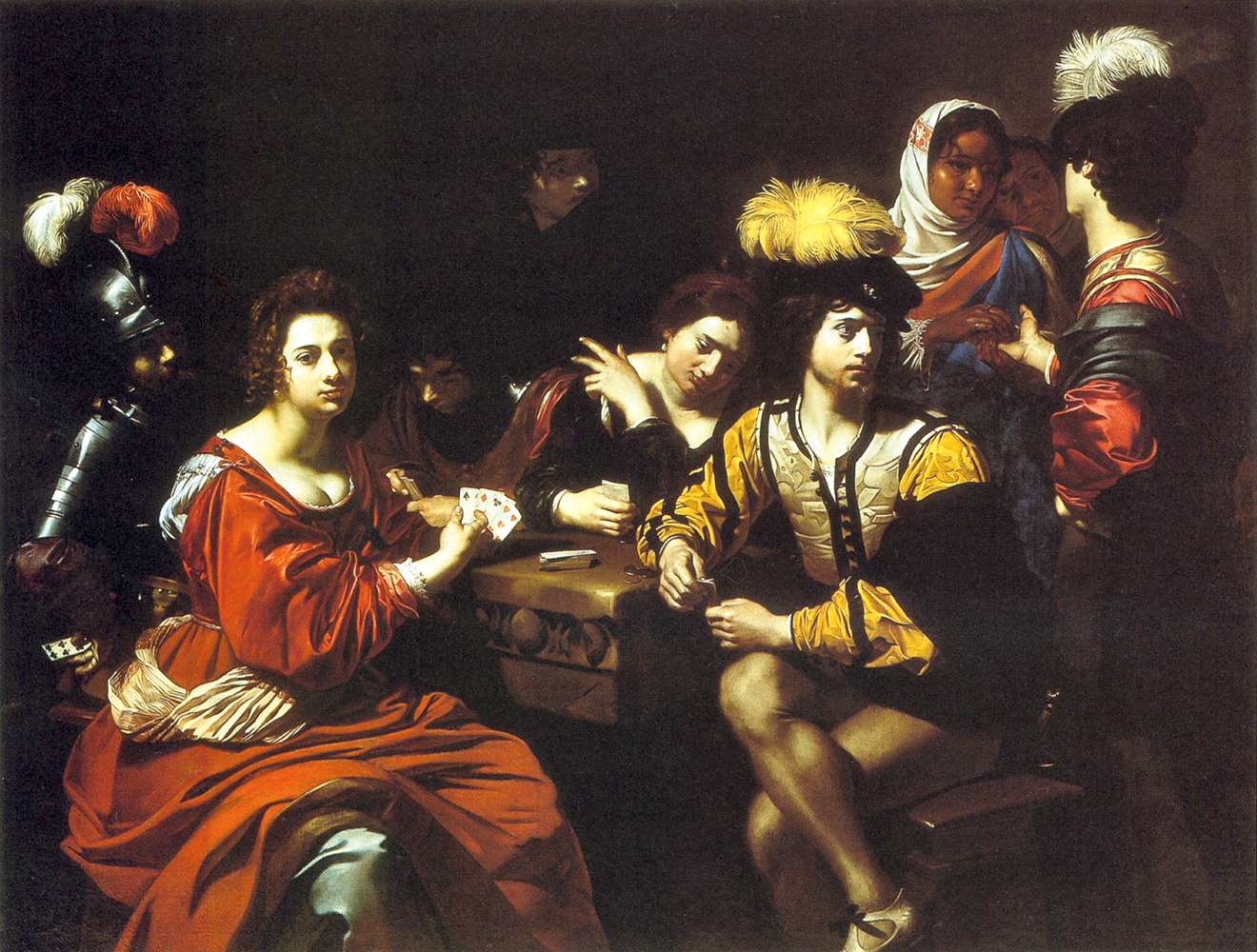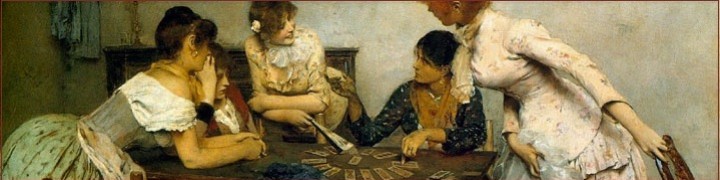
Here’s a second painting that clearly tells a story (see the earlier Dorés’ Saltimbanques). This picture is by the Flemish painter Nicolas Régnier (1591?-1667), a contemporary of Caravaggio, who spent most of his life in Italy. Many of Régnier’s paintings show the seamier or more frivolous side of life and several feature gypsies. One commentator characterized his work as expressing a “poetics of seduction.” This painting from around 1620 has variously been entitled Kartenspielende Gesellschaft and The Cardplayers and the Fortune-Teller. Use the Comments to tell us what story (or stories!) you see in this picture. What relationship might the artist be implying between cards and palm reading? What do each of these nine people want? Click on the image to see a larger version. Have fun.
Congratulations to Gina Rabbin of San Francisco, California who is the winner of the contest to identify the nine cards in my blog header. This wasn’t an easy task, and Gina did an outstanding job. These tarot decks reflect some of my favorite tarot art. Enjoy checking them out.
The cards are, left to right:
Strength, from The Star Tarot by Cathy McClelland.
Wheel of Fortune, from the Tarot Chapel of Avenieres (not a deck).
The Tower, from The Kashmir Tarot by Nicolas van Beek (book by Rachel Pollack).
The Magician, from Arto Tarot by Jane Estelle Trombley (#17 of Adam McLean’s Artwork Tarots).
The Fool, from Ancestral Path Tarot by Julie Cuccia-Watts (o.p.), with author Tracey Hoover as the Fool.
The Chariot, from The Millenium Tarot: Tarot of the Four Worlds by Mary Susan Chamberlain & Ziba Vilmanis-Westenberg (o.p.)
The Empress, from The Healing Tarot by Jennifer Elizabeth Moore.
Death (Le Passage), from Tarot Initiatique Des Maestres (“Initiatory Tarot of the Masters”) by Daniele Didier and artists Tristan Ra & Cleremond (o.p.).
The Hermit, from The New Star Tarot by Erika McGinnis.
Contest Closed. And the winner is Gina Rabbin.
Win a copy of Origins of the Tarot: Cosmic Evolution and the Principles of Immortality by Dai Léon for identifying the cards/decks in my current header.
“Conventional wisdom traces Tarot cards to medieval Italy, but their roots go back much further in time and draw on a surprisingly rich variety of cultures and spiritual traditions. Combining pioneering scholarship with practical spiritual instruction, Origins of the Tarot is the first book to unveil the full range of the ancient streams of wisdom from which the Tarot emerged.” Read more here.
Hints: Most are self-published but viewable on the internet. One has never been published as a deck but I link to the images in my blog.
RULES:
- Do not post your response as a comment until there has been a winner. Instead email me directly with information on all nine cards.
- Include card name, deck title and creator, and identifying info on the one non-published image.
- I can only mail to an address in the United States or Canada (unless the winner is willing to pay postage).
Happy Hunting.


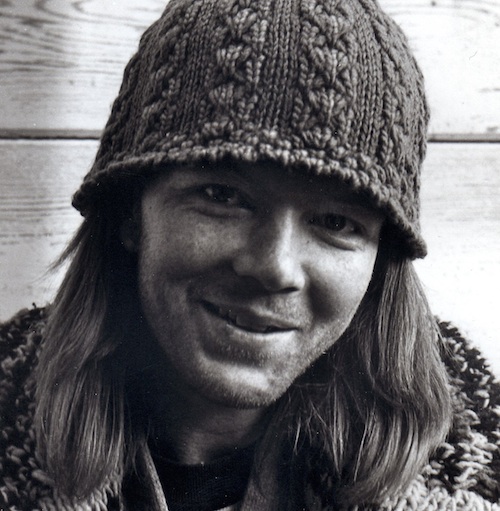
Jim Carroll (1949 – Sept. 11, 2009), author of the book/film, The Basketball Diaries, as I knew him—poet, friend: Bolinas, California, 1976-78. Read the rest of this entry »
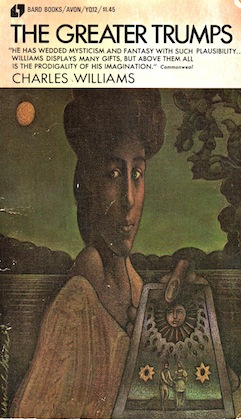
I am reprinting here a long review by Paul Nagy of the greatest tarot novel of all time, Charles Williams’s The Greater Trumps (1932)—with contributions from Nigel Jackson’s Amazon review (marked in blue). Paul has been reading tarot for over 40 years, is one of the active members of the Raleigh-Durham Tarot Meetup Group, offers tarot teleclasses, and leads a discussion series on the book Meditations on the Tarot. Paul’s introduction to some of the symbolism in this book should make it far more accessible and intriguing to modern readers. Nigel Jackson is the creator of Medieval Enchantment: The Nigel Jackson Tarot and The Rumi Tarot. Paul wishes to also acknowledge the insights of Glen Cavaliero and Michael Huggins whose reviews on Amazon.com contributed to initial drafts of this piece.
Charles Williams (1886-1945) was a novelist, poet, theologian, and member of Waite’s Fellowship of the Rosy Cross. He wrote seven occult novels—among the best ever written. Read about Charles Williams later in this post. At the very end you will find a list and description of the Trumps as modified by Williams. Now, here’s Paul Nagy:
THE GREATER TRUMPS
Williams’ use of symbolism is near its peak in The Greater Trumps. It is a classic occult mystery play where all the forces of truth and justice are very conventionally established as staid British institutions set against anarchistic gypsy intrigue and in the mysterious figures of the tarot Trumps. The trumps motivate and embody the characters, set the action and redeem the antagonists by being themselves neutral leaves from the tree of knowledge of good and evil that compete for their control.
The “Greater Trumps” are the original set of Tarot, the ur-deck of hyper powerful cards, bequeathed to a minor English civil servant, Lothair Coningsby (a rather dim and pompous fellow), by a deceased distant relative. Lothair’s daughter, the spritely Nancy is engaged to a young man, Henry Lee, whose heritage is Romany. In considering what to do with these very rare, old set of Tarot cards, Lothair Coningsby intends to turn them over to a museum upon his own death. The Lee family has something else in mind. Read the rest of this entry »
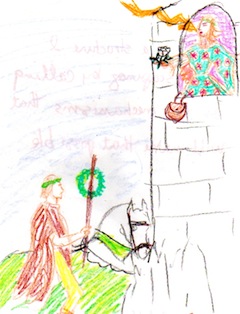
Les Cartes Vivantes or Living Playing Cards (1904 and reshot in 1905) by Georges Méliès offers an different perspective on the idea of “stepping into the cards.”
Georges Méliès (1861-1938) was a stage magician turned French film maker who, because of his innovative work with film, became known as the “Cinemagician.” An “in-depth look at the cinema’s first creative genius” is available here and an appreciation of Méliès by Brian Selznick, author of The Invention of Hugo Cabret is here.
Thanks to Tero and his website Tarotpuu.
♥
“If you’re interested in deepening your understanding of the Tarot, forming a personal bond with your deck, or enhancing your abilities as a reader, 21 Ways to Read a Tarot Card is an excellent experiential guide for connecting with the cards.” —Janet Boyer
Are you looking for a way to enliven your tarot practice and expand your skills? Then I urge you to try Mary K. Greer’s 21 Ways to Read a Tarot Card. This is a shameless plug for my latest book. I wrote it, in part, to help you discover what reading style you most resonate with but also to push the boundaries of what you thought was possible in a tarot reading. It’s all about how to discover meaning for yourself. It’s also where I reveal all my tarot reading “secrets.”
I first read Victor Frankl’s Man’s Search for Meaning a very long time ago. As an army brat who had lived in post-War Japan and Germany I was interested in Frankl’s concentration camp story and how he not only survived but transformed his experience into gold. What stuck with me was his belief that “Everything can be taken . . . [except for] the last of the human freedoms—to choose one’s attitude in any given set of circumstances, to choose one’s own way.” Read the rest of this entry »
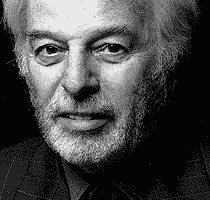
Alejandro Jodorowsky presents a variation on the Three Card Spread that I’ve found very powerful. I call it “Jodorowsky’s Three Card Theosophic Sum Spread” because you begin with three cards that expand into seven (Major Arcana only). Jodorowky calls it, “Reading three cards according to their number value.” A “theosophic sum” results from adding a set of numbers and then reducing them, usually to a single digit or “root” number but, in the case of tarot, to a number that is 22 or below. By adding all the variations of the numbers in the three card spread you end up with four additional cards (see instructions below).
Jodorowsky was the writer/director of the late ’60s controversial cult films, El Topo and The Holy Mountain, re-released in 2007. The Holy Mountain contains Tarot content, a bit of which can be seen in this video tarot lecture by him (with English subtitles). I encourage you to look at his The Way of Tarot: The Spiritual Teacher in the Cards (co-written with Marianne Costa and formerly available only in French and Spanish). It will be available in English this December—get your pre-order in now. I highly recommend this book (which I’ve been slowly making my way through in Spanish) as an excellent way of understanding Marseille-style decks and especially for in-depth methods of reading the Major Arcana (he also discusses the Minors). Read the rest of this entry »
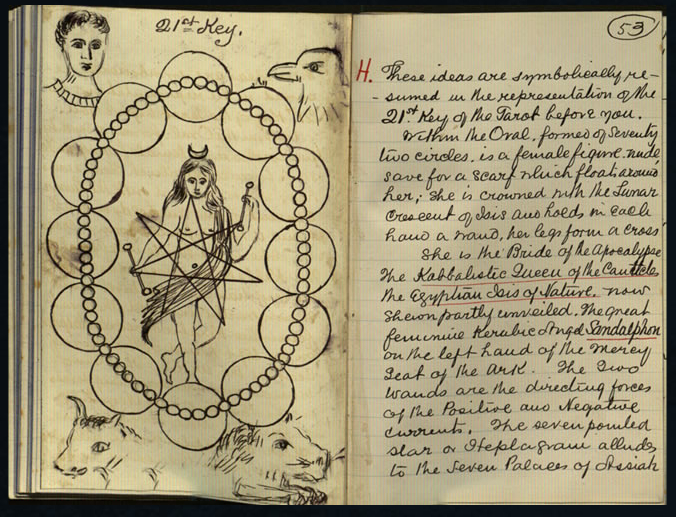
For those who are interested in material about the Hermetic Order of the Golden Dawn, you can see original ritual tools and pages from Golden Dawn notebooks at the William Butler Yeats Online Exhibit—brought to you by the National Library of Ireland. The whole exhibit is one of the most amazing web productions I have seen and worth a trip just to see what can be accomplished online.
When you get to the site, launch the exhibition, and then view “interactives”. The 8th item down is “The Hermetic Society of the Golden Dawn”—click. This takes you to a virtual museum case. Click on any item you want to see, then click again on that item when it appears in the gray box. For the notebooks, a selection of pages will appear below it, which you can individually examine and read. The notebooks are from Yeats’ uncle, George Pollexfen, and some of the illustrations are quite lovely.
I hope you spend time “walking” around the two exhibition rooms. You’ll find videos, Yeats’ own reading of the “Lake Isle of Innisfree,” a re-creation of a corner of his chambers, Florence Farr’s psaltery, and much, much more.
♥
I don’t like to criticize someone else’s reading as tarot card meanings are not fixed, and it is an art, not a science—but there’s a lot of confusion in the four minute reading for Whoopi Goldberg on The View—watch it here. I thought I’d clear up what I can. Read the rest of this entry »


Mary K. Greer has made tarot her life work. Check here for reports of goings-on in the world of tarot and cartomancy, articles on the history and practice of tarot, and materials on other cartomancy decks. Sorry, I no longer write reviews. Contact me
Recent Comments